
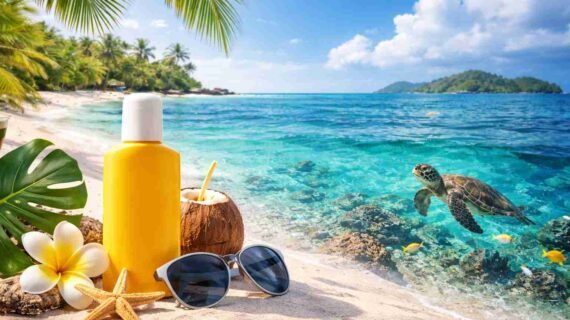
Reef Safe Sunscreen Guide is an important topic for travelers, surfers, snorkelers, and divers who want to protect their skin from the sun without harming the ocean. Many people visiting tropical destinations like Bali spend long hours in the water, but traditional sunscreens often contain chemicals that damage coral reefs and marine life. A proper Reef Safe Sunscreen Guide helps ocean lovers choose products that protect both their skin and fragile ecosystems.
Coral reefs are some of the most diverse ecosystems on Earth, yet they are extremely sensitive to pollution. Even small amounts of certain sunscreen chemicals can cause coral bleaching, disrupt marine organisms, and affect reef growth. By understanding how reef-safe sunscreen works and how to choose the right one, travelers can enjoy the ocean responsibly while helping preserve underwater environments for future generations.
Why Reef Safe Sunscreen Matters
Many conventional sunscreens contain chemicals that wash off our skin when we swim. These chemicals enter the ocean and can accumulate around popular beaches and reef areas. Studies have shown that certain sunscreen ingredients can stress coral reefs and interfere with their ability to grow and reproduce.
Coral reefs support thousands of marine species including fish, turtles, and microscopic organisms that form the foundation of the ocean food chain. When reefs become damaged, the entire marine ecosystem suffers. This is why several destinations around the world have started regulating harmful sunscreens.
Choosing reef safe sunscreen is a simple but powerful step individuals can take to reduce environmental impact while enjoying the ocean.
Chemicals to Avoid in Sunscreen
When shopping for sunscreen, the label may say “reef safe,” but it is still important to check the ingredient list. Some chemicals commonly found in sunscreens have been linked to coral reef damage.
Oxybenzone
Oxybenzone is one of the most commonly criticized sunscreen ingredients. Research has shown that it can cause coral bleaching, damage coral DNA, and disrupt marine life development. Even tiny amounts can affect coral reefs.
Octinoxate
Octinoxate is another chemical that has raised environmental concerns. It can affect coral reproduction and contribute to reef stress. Like oxybenzone, it easily washes off the skin in seawater.
Octocrylene
Octocrylene is widely used to stabilize sunscreen formulas, but it may accumulate in marine environments and has raised concerns among environmental researchers.
Avoiding these chemicals is one of the most important steps in choosing reef friendly sunscreen.
What Makes Sunscreen Reef Safe
Reef safe sunscreens typically use mineral-based ingredients instead of chemical filters. These ingredients sit on top of the skin and reflect sunlight rather than absorbing it.
The most common reef safe ingredients include:
Zinc Oxide
Zinc oxide is widely considered one of the safest and most effective sun protection ingredients. It provides broad spectrum protection against UVA and UVB rays while being less harmful to marine ecosystems.
Titanium Dioxide
Titanium dioxide is another mineral ingredient used in reef friendly sunscreens. It works similarly to zinc oxide by reflecting sunlight away from the skin.
When choosing mineral sunscreen, look for non-nano formulations whenever possible. Non-nano particles are larger and less likely to be absorbed by marine organisms.
How Sunscreen Affects Coral Reefs
Coral reefs are living organisms that rely on a delicate balance with microscopic algae. These algae provide corals with energy through photosynthesis and give them their vibrant colors.
Certain sunscreen chemicals disrupt this relationship, causing the algae to leave the coral. When this happens, the coral becomes white in a process known as coral bleaching. If the stress continues, the coral can die.
Tourist-heavy destinations often see thousands of swimmers entering the ocean daily. Even small amounts of sunscreen washing off each person can accumulate and impact reef environments.
Read more: What Is A Lizzy Kiss
Tips for Choosing Reef Safe Sunscreen
Selecting the right sunscreen can be simple if you know what to look for. Here are a few practical tips:
Check the ingredient list carefully and avoid oxybenzone and octinoxate.
Choose mineral-based sunscreens with zinc oxide or titanium dioxide.
Look for products labeled non-nano mineral sunscreen.
Choose water-resistant formulas if you plan to swim or surf.
Avoid spray sunscreens that may disperse chemicals into the environment.
By following these guidelines, travelers can reduce their impact on marine ecosystems.
Read more: Eco Friendly Surf Travel Tips
Additional Ways to Protect Reefs While Swimming
Using reef safe sunscreen is an important step, but there are other ways to reduce environmental impact when enjoying the ocean.
Wear Sun Protective Clothing
Rash guards, long sleeve swim shirts, and surf leggings provide excellent sun protection while reducing the amount of sunscreen needed. Many surfers and divers already rely on these garments for comfort and protection.
Apply Sunscreen Before Entering the Water
Applying sunscreen 20 to 30 minutes before swimming allows it to absorb into the skin and reduces how much washes off into the ocean.
Avoid Touching Coral
Coral reefs are extremely fragile. Even light contact can damage their protective layer and make them more vulnerable to disease.
Support Eco-Friendly Brands
Many sunscreen companies are now focusing on environmentally friendly formulas and sustainable packaging. Supporting these brands encourages more responsible production.
Read more: Why Do Guys Moan When Kissing
Destinations That Promote Reef Safe Sunscreen
Several coastal regions have started encouraging or regulating reef safe sunscreen use. These measures aim to protect sensitive marine environments from chemical pollution.
Popular tropical destinations that promote reef safe practices include island regions, marine parks, and protected coral reef zones. Many dive operators and surf schools also educate visitors about responsible sunscreen choices.
These efforts highlight the growing awareness that tourism and ocean conservation must work together.
Read more: Protecting Balis Oceans As A Surfer
Common Myths About Reef Safe Sunscreen
There are several misconceptions about reef safe sunscreens that sometimes confuse consumers.
One myth is that reef safe sunscreens are less effective. In reality, mineral sunscreens with zinc oxide provide excellent broad spectrum protection when applied correctly.
Another misconception is that reef safe sunscreen is always thick and leaves a white layer on the skin. While early mineral sunscreens had this issue, modern formulas are much lighter and easier to apply.
Finally, some products labeled “reef friendly” may still contain questionable ingredients, which is why checking labels remains important.
Read more: Where Do Men Love To Be Touched Most
Conclusion
Reef Safe Sunscreen Guide information is essential for anyone who enjoys spending time in the ocean. Sunscreen protects our skin from harmful UV rays, but choosing the wrong type can damage fragile coral reef ecosystems.
By selecting mineral-based sunscreens, avoiding harmful chemicals, and practicing responsible ocean habits, travelers can help protect marine environments while still enjoying the sun. Simple choices like wearing sun protective clothing, applying sunscreen early, and supporting eco-friendly brands can make a significant difference.
Protecting coral reefs requires collective effort from travelers, ocean enthusiasts, and tourism operators. When individuals choose reef safe sunscreen, they contribute to preserving vibrant coral reefs and the incredible marine life that depends on them.