
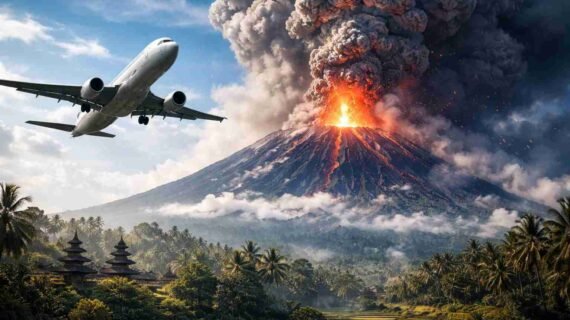
Are flights cancelled as massive volcano erupts in Bali? This question quickly spreads across search engines and social media whenever volcanic activity increases on the island. Bali, known for its world-class tourism, is also home to active volcanoes, which can sometimes impact travel plans—especially flights. In this article, we break down what actually happens during a volcanic eruption, whether flights are truly cancelled, and what travelers should expect.
Understanding Volcanic Activity in Bali
Bali sits on the Pacific Ring of Fire, making volcanic activity a natural part of the island’s geography. The most well-known active volcano is Mount Agung, which has experienced eruptions in recent years.
However, not every eruption leads to travel disruption. Many volcanic events are minor, localized, and carefully monitored by Indonesian authorities. The key factor that affects flights is not the eruption itself—but volcanic ash.
Why Volcanic Ash Affects Flights
Airlines are highly sensitive to volcanic ash because it can damage aircraft engines, reduce visibility, and pose serious safety risks. Even a small amount of ash in the airspace can lead to precautionary measures.
When ash clouds rise into flight paths, aviation authorities may:
- Reroute flights
- Delay departures
- Cancel flights temporarily
This is done to ensure passenger safety, not because the airport itself is necessarily unsafe.
Are Flights Cancelled During a Massive Eruption?
The answer depends on the severity of the eruption and the direction of the ash cloud.
When Flights Are Cancelled
Flights are typically cancelled if:
- Ash clouds reach cruising altitudes
- Winds carry ash toward Bali’s main airport
- Visibility drops below safe levels
- Aviation authorities issue warnings
In these cases, Ngurah Rai International Airport may temporarily suspend operations.
When Flights Continue Normally
Flights may continue as usual if:
- The eruption is small or contained
- Ash clouds move away from flight paths
- Weather conditions disperse the ash quickly
This is why you might see headlines about an eruption while flights are still operating without disruption.
How Long Do Flight Disruptions Last?
Most flight disruptions caused by volcanic eruptions in Bali are temporary.
- Minor disruptions: a few hours
- Moderate disruptions: 1–2 days
- Severe eruptions: several days (rare)
Airlines and airport authorities continuously monitor conditions, and flights resume as soon as it is safe.
How Airlines Handle Volcanic Disruptions
Airlines prioritize passenger safety and typically offer:
- Free rebooking options
- Flight rescheduling
- Travel vouchers or refunds
Passengers are advised to stay in close contact with their airline and monitor official updates.
Read more: A Day in the Life of a Surf Instructor in Canggu
What Travelers Should Do
If you are planning to travel to or from Bali during a volcanic event, here are practical steps to follow:
Stay Updated
Check real-time updates from:
- Your airline
- Airport announcements
- Local government advisories
Be Flexible
Travel plans may change quickly, so flexibility is key. Avoid tight connections or fixed schedules during periods of volcanic activity.
Prepare for Delays
Have essentials ready in case of delays:
- Extra clothing
- Medication
- Travel documents
- Portable chargers
Impact on Tourism in Bali
Despite occasional eruptions, Bali remains a safe and popular destination. Tourism infrastructure is well-prepared to handle such situations, and disruptions are usually short-lived.
Hotels, tour operators, and local businesses are experienced in assisting travelers during unexpected events.
Read more: What Are the Biggest Risks in Bali
Is It Safe to Travel to Bali During an Eruption?
In most cases, yes—it is safe to travel to Bali even during periods of volcanic activity. Authorities establish exclusion zones around volcanoes, ensuring that tourists stay at a safe distance.
The main inconvenience is usually related to transportation, not safety.
Read more: How to Improve Your Pop-Up Technique Fast
The Role of Wind Direction
One of the most important factors in determining flight cancellations is wind direction.
- If winds carry ash away from the airport → flights continue
- If winds carry ash toward the airport → delays or cancellations occur
This is why flight status can change rapidly, even within the same day.
Read more: How Far Is Bali from the Volcano Eruption
Historical Examples of Flight Disruptions
In past eruptions, Bali has experienced temporary airport closures lasting from several hours to a few days. However, long-term shutdowns are extremely rare.
The aviation industry has improved its ability to track ash clouds, allowing for more precise and shorter disruptions.
Read more: How to Avoid Surf Fatigue on Multi-Day Trips
Conclusion
Are flights cancelled as massive volcano erupts in Bali? The answer is: sometimes—but not always. Flight cancellations depend on ash clouds, wind direction, and safety assessments rather than the eruption itself.
Most disruptions are temporary, and Bali remains a well-managed and safe destination for travelers. Staying informed and flexible is the best way to handle any potential impact on your travel plans.
FAQ
No, not all flights are cancelled. Only flights affected by volcanic ash in the airspace may be delayed or cancelled.
Check directly with your airline or monitor airport updates for real-time information.
Ngurah Rai International Airport is the main airport that may experience disruptions during volcanic activity.
Most airlines offer refunds, rebooking, or travel vouchers if cancellations are due to volcanic activity.
Generally, no. As long as you stay outside restricted zones, Bali is considered safe for tourists.
Flight disruptions are relatively rare and usually short-lived, even when eruptions occur.
Not necessarily. It’s best to monitor updates and make decisions based on official information rather than headlines.
The main risk is flight delays or cancellations, not personal safety.
It depends on weather conditions, but ash clouds typically disperse within hours to a few days.
Yes, many travel insurance policies cover delays and cancellations caused by natural events like volcanic eruptions.