
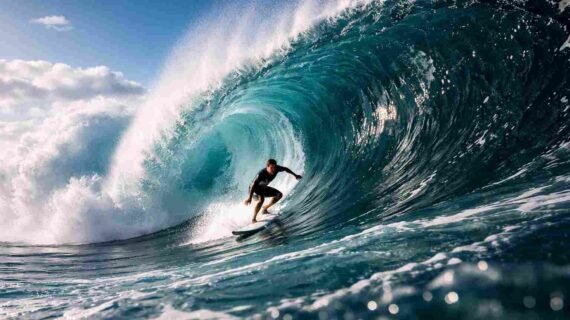
Managing Fear in Bigger Waves is something every surfer experiences at some point in their surfing journey. Even experienced surfers can feel nervous when the ocean suddenly becomes more powerful. Bigger waves bring more speed, more force, and often more crowded lineups. Learning how to control fear instead of letting it control you is one of the most important mental skills in surfing. When you understand your fear and know how to manage it, bigger waves become less intimidating and more exciting.
Understanding Why Bigger Waves Feel Scary
Fear in bigger surf is completely natural. The ocean is powerful, unpredictable, and much stronger than any human. When waves grow larger, your brain automatically enters a protective mode. It starts asking questions like: What if I fall? What if I wipe out badly? What if I can’t paddle back out?
These thoughts are normal survival instincts. The key is not eliminating fear completely but learning how to manage it so it doesn’t freeze you or stop you from improving.
Many surfers feel fear because they lack experience in larger conditions. If you usually surf small waves and suddenly face waves twice the size, your body and mind may not feel prepared. Fear often comes from uncertainty, not from the wave itself.
Understanding this helps you realize that fear is simply your mind asking for preparation.
Respecting the Ocean Without Panicking
There is a big difference between fear and respect. Respect for the ocean is healthy and necessary. Panic, however, can cause poor decisions in the water.
Surfers who manage bigger waves well usually develop a calm respect for the ocean. They observe conditions carefully before entering the water and make smart choices about where and when to surf.
Watch the Ocean Before Paddling Out
Before entering the water, spend time watching the lineup. Look at:
- Wave size and consistency
- Where waves are breaking
- How strong the current is
- Where other surfers are sitting
- Safe paddle-out channels
This observation period can reduce anxiety because it helps your brain understand the environment. When you know what the waves are doing, they feel less unpredictable.
Build Confidence Step by Step
Confidence in bigger waves doesn’t happen overnight. The best surfers slowly progress their comfort zones over time.
Instead of jumping straight into large surf, gradually increase the wave size you surf. Each step builds experience and confidence.
Surf Slightly Bigger Waves Each Time
For example:
- If you are comfortable in waist-high waves, try chest-high conditions.
- Once chest-high feels easy, move to head-high waves.
- After that, you can start exploring slightly bigger surf.
This gradual progression allows your body and mind to adapt naturally.
Improve Your Paddle Strength
Fear often comes from feeling physically unprepared. When waves get bigger, paddling becomes more demanding.
Strong paddling gives you the confidence to:
- Catch waves earlier
- Escape breaking waves
- Return to the lineup quickly
Regular paddling practice or swimming training can dramatically improve your comfort level in bigger conditions.
Learn How to Handle Wipeouts
One of the biggest fears surfers have is wiping out in large waves. While wipeouts can feel intense, they are part of surfing and usually much safer when handled properly.
Understanding how to fall and stay calm underwater can remove much of this fear.
Stay Calm Underwater
When you wipe out in bigger waves:
- Relax your body.
- Protect your head with your arms.
- Let the wave finish its energy.
- Avoid fighting the turbulence.
Most wipeouts only hold you underwater for a few seconds, even in larger surf. Panic uses oxygen quickly, which is why staying calm is important.
Protect Yourself From Your Board
Your surfboard can sometimes be more dangerous than the wave itself. When falling:
- Cover your head with your arms.
- Keep your body compact.
- Wait a moment before surfacing in case another wave is coming.
These simple habits greatly reduce injury risk.
Control Your Mindset in the Lineup
Mental control is one of the most powerful tools for managing fear. Many surfers become overwhelmed because they focus on worst-case scenarios.
Instead, successful surfers focus on preparation and positive action.
Read more: How Do You Say Hello In Balinese
Use Breathing to Calm Your Nerves
Slow breathing can immediately reduce anxiety. Before paddling for a wave, take a deep breath and relax your shoulders.
This signals to your body that you are in control.
Focus on One Wave at a Time
When the ocean looks big and powerful, it can feel overwhelming. Instead of thinking about the entire session, focus only on the next wave.
Ask yourself simple questions:
- Is this wave surfable?
- Am I in the right position?
- Can I paddle into it confidently?
Breaking the situation into small decisions keeps your mind calm.
Read more: Surfing With Kids What Parents Should Know
Choose the Right Surf Spot
Not all bigger waves are the same. Some surf spots handle large swells in a safer, more manageable way.
Beach breaks often offer softer, more forgiving waves, while reef or point breaks may produce more powerful surf.
If you are learning to surf bigger waves, choose locations known for:
- Predictable wave patterns
- Clear channels for paddling out
- Less aggressive crowds
Surfing in a comfortable environment helps reduce stress and builds confidence.
Read more: What’s The Cheapest Month To Go To Bali
Surf With Friends or Experienced Surfers
Surfing bigger waves alone can increase anxiety. Surfing with friends or experienced surfers provides psychological support and safety.
When you see others successfully catching waves, your mind naturally becomes more confident.
Experienced surfers can also give helpful advice about:
- Where to sit in the lineup
- When to paddle for waves
- How to handle the conditions
This shared experience often makes bigger surf much less intimidating.
Read more: How To Stay Safe Surfing With Crowds
Accept That Fear Is Part of Progress
Every surfer who pushes into bigger waves feels fear. Even professional surfers admit they still feel nervous in powerful conditions.
Fear is not a weakness. It is simply a signal that you are pushing beyond your comfort zone.
The key is learning to manage that fear instead of avoiding it.
Each time you paddle into a slightly bigger wave, your comfort zone expands. Over time, waves that once felt scary start to feel normal.
Read more: Which Is Better Bali Or Thailand
Final Thoughts
Managing Fear in Bigger Waves is an essential skill for any surfer who wants to improve. Bigger waves will always demand respect, preparation, and mental control. By understanding your fear, progressing gradually, improving your physical strength, and staying calm in the water, you can transform fear into confidence.
Surfing is not just about riding waves—it is about developing a strong connection with the ocean and trusting your abilities. With time, experience, and patience, bigger waves will become less frightening and far more rewarding.