
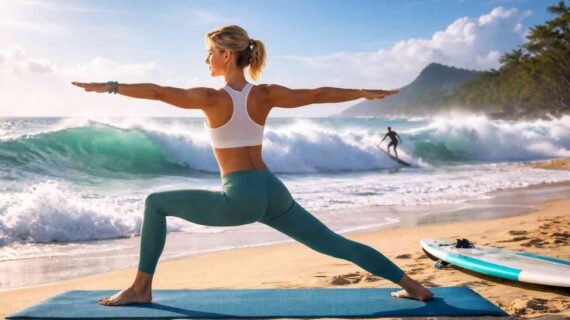
Yoga for Surfers: Key Poses is an essential topic for surfers who want to improve flexibility, balance, strength, and mental focus in the water. Surfing demands a combination of mobility, stability, and endurance, and yoga naturally complements these requirements. Many surfers around the world use yoga as part of their training routine because it helps prevent injuries, improves paddling posture, and enhances balance when riding waves. By practicing the right yoga poses regularly, surfers can move more fluidly on the board, recover faster after sessions, and stay stronger during long days in the ocean.
Why Yoga Is Perfect for Surfers
Surfing challenges nearly every muscle group in the body. Paddling requires shoulder strength and endurance, popping up demands explosive movement and core stability, and riding waves requires balance and flexibility. Yoga supports all of these physical elements while also improving breathing control and mental calmness.
One of the biggest benefits of yoga for surfers is increased flexibility. Tight hips, hamstrings, and shoulders can limit movement and make surfing more difficult. Yoga helps open these areas, allowing surfers to move more freely and maintain better posture on the board.
Another important advantage is injury prevention. Surfing can place stress on the lower back, shoulders, and knees. Yoga strengthens the supporting muscles and improves joint mobility, which reduces the risk of common surfing injuries.
Finally, yoga encourages mindfulness and breath control. These mental skills help surfers stay calm in challenging conditions and maintain focus when catching waves.
Key Benefits of Yoga for Surfing Performance
Before exploring specific poses, it is helpful to understand how yoga directly improves surfing ability.
Yoga strengthens the core muscles, which are essential for balance and stability while riding waves. A strong core helps surfers maintain control even when the wave becomes unpredictable.
Flexibility is another major benefit. Surfing requires quick transitions and dynamic body movements. Flexible hips, hamstrings, and shoulders make these movements smoother and more efficient.
Yoga also improves balance. Many yoga poses challenge stability in ways similar to surfing, training the body to stay steady even when the ground—or the surfboard—is unstable.
Lastly, breathing techniques learned in yoga can help surfers remain relaxed during wipeouts or hold-down situations.
Downward Facing Dog
Downward Facing Dog is one of the most effective yoga poses for surfers because it stretches multiple areas of the body at the same time.
This pose lengthens the hamstrings, calves, shoulders, and spine while strengthening the arms and upper back. These muscles are heavily used during paddling, so keeping them flexible and strong can improve endurance in the water.
To perform this pose, start on your hands and knees. Lift your hips toward the sky, straighten your legs as much as comfortable, and press your heels toward the floor. Keep your head relaxed between your arms and focus on steady breathing.
Holding this position for several breaths helps release tension and improve overall body alignment.
Cobra Pose
Cobra Pose is particularly useful for surfers because it strengthens the lower back and improves spinal mobility.
During surfing, the body spends a lot of time in a prone paddling position with the chest lifted. Cobra Pose mimics this movement and helps build the muscles that support the spine.
To perform Cobra Pose, lie face down on the floor with your hands under your shoulders. Slowly press through your hands to lift your chest while keeping your hips and legs on the ground. Avoid forcing the movement; the lift should feel smooth and comfortable.
Practicing this pose regularly can help surfers maintain a strong paddling posture without straining the lower back.
Warrior II Pose
Warrior II is excellent for building lower body strength and balance, both of which are crucial for controlling a surfboard.
This pose strengthens the legs, hips, and core while also improving stability. The stance closely resembles the surfing position, making it particularly beneficial for surfers.
To enter Warrior II, step one foot forward and bend the front knee while extending the back leg straight behind you. Stretch your arms out to the sides and keep your gaze focused over your front hand.
Holding this pose helps develop endurance in the legs and teaches the body to remain stable during dynamic movements.
Tree Pose
Balance is one of the most important skills in surfing, and Tree Pose is a simple but powerful way to improve it.
In this pose, you stand on one leg while placing the sole of the other foot against the inner thigh or calf. Your hands can be together at your chest or raised overhead.
Tree Pose trains the small stabilizing muscles in the legs and core, which are essential for maintaining balance on a surfboard. It also improves concentration and body awareness.
Practicing Tree Pose regularly can make it easier to stay centered and stable while riding waves.
Read more: Is It Better To Carry Cash Or Card In Bali
Pigeon Pose
Surfing often tightens the hips due to repetitive paddling and crouched stances. Pigeon Pose is one of the best yoga poses for releasing this tension.
This pose deeply stretches the hips, glutes, and lower back. Improved hip mobility allows surfers to move more fluidly when transitioning from paddling to standing.
To perform Pigeon Pose, bring one knee forward between your hands while extending the other leg straight behind you. Lower your hips toward the ground and keep your chest lifted or fold forward for a deeper stretch.
Holding this pose for several breaths helps release built-up tension in the hips and improves overall mobility.
Read more: How To Improve Balance For Surfing
Bridge Pose
Bridge Pose strengthens the posterior chain, including the glutes, hamstrings, and lower back. These muscles play an important role in maintaining stability and power while surfing.
To practice Bridge Pose, lie on your back with your knees bent and feet flat on the floor. Press through your feet to lift your hips toward the ceiling while keeping your shoulders grounded.
This pose builds strength in the lower body and supports better posture both in and out of the water.
Read more: What Month Not To Go To Bali
Child’s Pose for Recovery
Child’s Pose is a gentle resting posture that allows the body to relax and recover after a surf session or yoga practice.
This pose stretches the lower back, hips, and shoulders while calming the nervous system. It is especially helpful after intense physical activity or long surf sessions.
To enter Child’s Pose, kneel on the floor, sit back on your heels, and stretch your arms forward while lowering your forehead toward the mat.
Holding this pose for a few minutes encourages deep breathing and relaxation.
Read more: Surf Fitness Routine For Beginners
How to Build a Simple Yoga Routine for Surfers
Surfers do not need to spend hours practicing yoga to experience the benefits. Even a short routine of 10 to 15 minutes can significantly improve mobility and strength.
A simple yoga sequence might begin with Downward Facing Dog to warm up the body, followed by Cobra Pose to activate the back muscles. Warrior II can then build strength and stability in the legs, while Tree Pose improves balance.
After these active poses, Pigeon Pose and Bridge Pose can release tension and strengthen supporting muscles. Ending the routine with Child’s Pose allows the body to relax and recover.
Consistency is more important than intensity. Practicing yoga a few times each week can gradually improve surfing performance and overall body health.
Read more: Where Is The Most Crime In Bali
Final Thoughts
Yoga for Surfers: Key Poses offers a powerful way to support surfing performance both physically and mentally. By improving flexibility, strengthening important muscle groups, and enhancing balance, yoga helps surfers move more efficiently in the water.
The poses outlined above target the areas most used in surfing, including the shoulders, core, hips, and legs. When practiced consistently, they can reduce injury risk, increase endurance, and make surfing more enjoyable.
For surfers of all levels, adding yoga to a regular training routine is a simple but highly effective way to stay strong, flexible, and ready for the next wave.