Dian Surf School Canggu Bali | Top Rated Surf Lessons For All Levels

Mistakes Beginner Surfers Make

Mistakes Beginner Surfers Make

Mistakes beginner Surfers Make. Surfing looks effortless when you watch experienced riders glide across a wave, but every surfer starts as a beginner — and beginners make mistakes. That’s not a bad thing. In fact, mistakes are part of the learning process and often the fastest way to improve. Understanding the most common beginner surfing mistakes can help you progress faster, stay safer, and enjoy your time in the water much more.

Below are the key mistakes new surfers make and how to avoid them.

Choosing the Wrong Board

One of the biggest mistakes beginners make is starting with a board that is too small or too advanced. Many new surfers want to ride shortboards because they look cool or because that’s what experienced surfers use. However, shortboards require strong paddling skills, balance, and wave timing — things beginners haven’t developed yet.

A larger soft-top board or longboard is much more forgiving. It provides better stability, paddles faster, and helps you catch more waves. More waves mean more practice, and more practice means faster improvement.

Skipping the Basics on Land

Many beginners are so excited to get into the water that they skip practicing the pop-up on land. The pop-up is the movement of going from lying on the board to standing, and it’s one of the most important skills in surfing.

Practicing on the beach helps build muscle memory so that when you catch a wave, your body reacts automatically. Without this practice, beginners often hesitate, lose balance, or stand incorrectly.

Poor Positioning in the Water

Catching waves isn’t just about paddling hard — it’s about being in the right place. Beginners often sit too far from where waves break or paddle for waves that are already too steep.

Learning to read waves takes time, but watching other surfers, observing where waves start to break, and asking instructors for tips can dramatically improve positioning. Good positioning means less effort and more successful rides.

Looking Down Instead of Forward

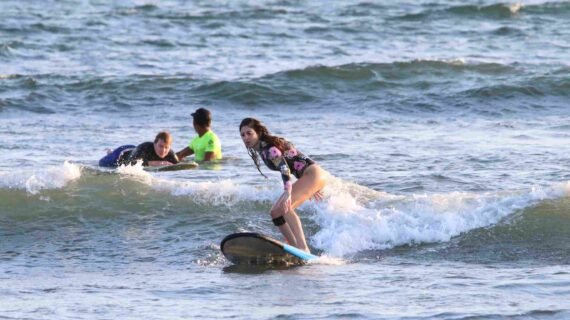
Where you look is where your body goes. Many beginners stare at their feet when they stand up, which causes them to lose balance and fall quickly.

Keeping your eyes forward toward the direction you want to go helps maintain stability and control. It also improves your posture and makes turning easier as you progress.

Standing with Incorrect Foot Placement

Foot placement is crucial for balance and control. Beginners often stand too narrow, too wide, or with their feet facing the wrong direction.

A stable stance usually means feet about shoulder-width apart, knees slightly bent, and weight centered. Your back foot should be near the tail for control, while your front foot stays around the middle of the board.

Not Paddling Enough

Surfing is actually more paddling than riding. Beginners frequently underestimate how much paddling is needed and tire quickly.

Improving paddling technique — long, deep strokes and a relaxed body — will help conserve energy. The stronger your paddling, the easier it is to catch waves and stay in the lineup longer.

Holding the Breath or Tensing Up

Wipeouts are part of surfing, but beginners often panic underwater. Holding your breath tightly and tensing your muscles can make wipeouts feel more stressful than they actually are.

Staying relaxed, covering your head, and letting the wave pass is usually the safest approach. Confidence in the water grows over time as you experience more wipeouts and realize they’re manageable.

Ignoring Surf Etiquette

Surf etiquette keeps everyone safe and prevents collisions. Beginners sometimes paddle into waves already being ridden or drop in on other surfers because they don’t know the rules.

The general rule is that the surfer closest to the breaking part of the wave has priority. Taking a few minutes to learn etiquette shows respect and makes the lineup more enjoyable for everyone.

Read More : Story Of Kecak Dance Before You Visit Bali All You Need To Know

Going Out in Conditions That Are Too Big

Excitement can push beginners to surf waves that are too powerful for their skill level. Bigger waves mean stronger currents, faster takeoffs, and more challenging wipeouts.

Starting in small, gentle waves helps build confidence and technique. As skills improve, you can gradually move to more challenging conditions.

Read More : From Beginner To Surfer In One Lesson

Expecting Fast Progress

Surfing is a sport that requires patience. Beginners sometimes feel frustrated when they don’t improve quickly, but progress in surfing often comes in small steps.

Celebrating small wins — like catching one more wave or standing a little longer — keeps motivation high. Consistency is the key to improvement.

Read More : Sunrise Surf Season In Bali

Not Taking Lessons

While it’s possible to learn on your own, professional instruction can speed up the learning curve dramatically. Lessons help beginners understand safety, technique, and ocean awareness from the start.

Even one or two lessons can build a strong foundation and prevent bad habits that are hard to fix later.

Read More : Why Canggu Perfect For First Time Surfer

Final Thoughts

Every surfer has gone through the beginner stage, and mistakes are simply part of the journey. The key is to learn from them, stay patient, and keep getting in the water. By choosing the right equipment, practicing the basics, understanding the ocean, and respecting surf etiquette, beginners can progress faster and enjoy the process much more.

Surfing isn’t just about standing on a board — it’s about connecting with the ocean, embracing challenges, and celebrating small improvements along the way. The more you surf, the more these early mistakes turn into valuable lessons that shape you into a confident and capable surfer.