
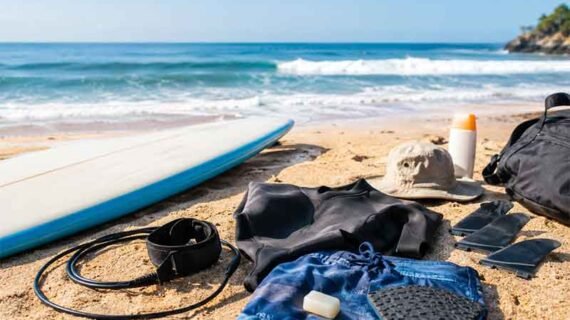
Choosing the right surfing gear can make every session more comfortable, enjoyable, and productive. Whether you’re catching your first wave or improving your turns, the equipment you use affects your balance, paddling ability, and confidence in the water.
The best approach is to match your gear to your skill level, body size, local wave conditions, and surfing goals. You don’t need to buy the most expensive equipment to get started. Focus on the essentials first, then upgrade as your skills develop.
1. Choose the Right Surfboard for Your Experience
Your surfboard is the most important piece of surfing equipment. The right board helps you catch waves more easily and maintain better control.
Surfboards for Beginners
Beginners generally benefit from a soft-top surfboard with plenty of volume. These boards provide better flotation, improve stability, and are more forgiving when you fall.
A longer board, often around 8–9 feet, is a practical starting point for many adult beginners. However, the ideal size depends on your weight, height, fitness, and the waves you’ll be surfing.
If you’re unsure which board suits your needs, explore this guide to choosing the right surfboard for your level.
Surfboards for Intermediate and Advanced Surfers
Intermediate surfers may prefer a funboard or a smaller board that offers more maneuverability while retaining enough volume for easy paddling.
Advanced surfers often choose shortboards for sharper turns and faster reactions. Longboards remain popular for smooth rides and traditional surfing styles.
Before switching to a smaller board, make sure you can paddle efficiently, catch waves consistently, and control your takeoff.
2. Select Surfing Clothing for Comfort
The right surfing clothing protects your skin and helps you stay comfortable during long sessions.
Rash Guards and Wetsuits
In warm destinations such as Bali, a rash guard can help reduce sun exposure and prevent skin irritation from rubbing against the board. Boardshorts or a comfortable swimsuit are also common choices.
In colder water, a wetsuit provides insulation. Its thickness should match the water temperature, while the fit should feel snug without restricting your breathing or paddling.
Avoid buying a wetsuit that’s too loose. Excess water entering the suit can reduce warmth and make movement less comfortable.
Protect Yourself From the Sun
Surfing often involves hours of direct sunlight. Use water-resistant, reef-conscious sunscreen where available, and consider a surf hat designed to stay secure in the water.
Reapply sunscreen according to the product instructions, especially after extended exposure or repeated contact with water.
3. Don’t Forget Essential Surfing Accessories
Small accessories can make a significant difference to your safety and overall surfing experience.
Surfboard Leash
A leash connects your ankle or calf to your board, reducing the chance of losing it after a wipeout. Choose a leash suited to your board length and the wave conditions.
Check it regularly for cracks, worn swivels, or damaged connections. Replace it if you notice signs of weakness.
Surf Wax and Traction Pads
Surf wax improves grip on the deck of your board. Select wax designed for the water temperature you’ll be surfing in, and apply it to the appropriate area.
Traction pads provide additional grip, particularly on shortboards. They’re useful for surfers who perform more dynamic movements, although beginners don’t necessarily need one immediately.
Fins
Fins influence how your board tracks, turns, and responds to waves. Different fin setups offer different combinations of stability, speed, and maneuverability.
If you’re new to surfing, start with the fin setup recommended for your board. Experiment with alternatives once you understand how your current setup behaves.
4. Match Your Gear to Local Wave Conditions
Surfing gear should suit the waves, not just your personal preferences. A board that works well in powerful, steep waves may feel difficult to use in small, slow conditions.
For example, a high-volume board can help you catch smaller waves because it provides more flotation and makes paddling easier. A shorter, lower-volume board may suit experienced surfers looking for greater control in more powerful surf.
Before heading out, check the forecast, swell direction, wind, and tide. These factors influence wave quality and can help you decide which board to bring.
If you’re planning to surf in Bali, read this guide to the best time to surf in Bali to understand how conditions vary.
5. Set a Practical Budget for Surfing Equipment
You don’t need a complete collection of premium gear to enjoy surfing. Start with equipment that directly affects comfort, stability, and safety.
For beginners, renting a suitable surfboard is often more practical than purchasing one immediately. Rental equipment also gives you an opportunity to try different board sizes before making a decision.
As you surf more regularly, consider investing in your own board, leash, and sun-protection clothing. Compare durability, fit, and suitability rather than choosing equipment based on price alone.
If you’re planning your first surfing experience, this guide to preparing for your first surfing lesson in Bali can help you understand what to bring.
6. Prioritize Safety When Choosing Surfing Gear
Good equipment supports safe surfing, but it cannot eliminate ocean risks. Always choose gear appropriate for your ability and the conditions.
Beginners should use a suitable board, check their leash before entering the water, and learn basic surf etiquette. They should also understand how to identify currents and when to seek help.
Swimming ability is particularly important because surfing takes place in an unpredictable environment. If you’re not a confident swimmer, don’t assume that a surfboard alone makes you safe. Read more about whether you can surf without knowing how to swim.
For your first sessions, consider learning with a qualified instructor who can recommend suitable equipment and explain local conditions.
7. Where Can You Get Advice on Surfing Gear in Bali?
If you’re visiting Bali, getting advice from experienced local instructors can help you avoid buying equipment that doesn’t match your ability.
At Dian Surf, we offer surf lessons in Canggu, Bali, for people who want to learn the basics or improve their technique. Our instructors can help you understand which board and equipment are appropriate for your session.
Whether you’re a complete beginner or an intermediate surfer, you can explore our surf lessons in Canggu to find a suitable learning experience.
Contact Dian Surf to arrange your session:
- Location: Canggu, Bali, Indonesia
- Phone/SMS/WhatsApp: +6281775017301
- Booking: Use the chat button on our website at Dian Surf School Canggu.
Final Thoughts
Learning how to choose surfing gear starts with understanding your ability, the waves you plan to surf, and the equipment that helps you feel comfortable in the water.
Prioritize a suitable surfboard, comfortable clothing, a reliable leash, and proper sun protection. Rent equipment when you’re starting out, ask experienced surfers for advice, and upgrade as your technique improves.
The goal isn’t to own the most gear. It’s to choose equipment that helps you surf with greater confidence, stay comfortable, and enjoy every session.