
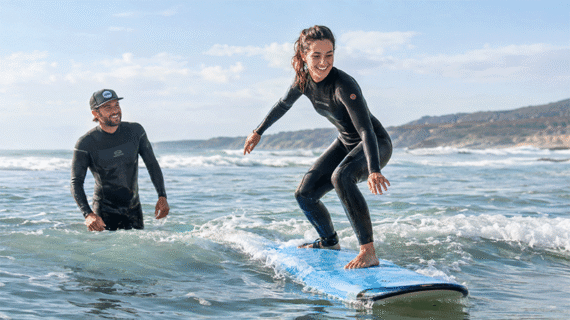
Learning to surf can be expensive if you buy the wrong gear, book too many lessons, or choose conditions that are too difficult. So, is surfing hard for beginners? The honest answer is: surfing is challenging at first, but most healthy beginners can learn the basics with proper instruction and beginner-friendly waves.
The first few sessions often involve falling, paddling, balancing, and trying to stand up before the wave reaches you. That can feel frustrating. However, surfing becomes much easier once you understand the basics and use the right equipment.
If you are considering paying for surf lessons, renting a board, or buying your first surfboard, understanding the learning curve can help you spend your money wisely.
Is Surfing Hard for Beginners?
Yes, surfing can be hard for beginners, but it is not necessarily difficult to start.
The biggest challenge is that surfing combines several skills at the same time. You need to paddle, read waves, balance on a moving board, stand up quickly, and control your body while the water is moving underneath you.
Unlike some sports, you cannot completely control the environment. Waves change constantly. Wind, tides, currents, and wave size can all affect your session.
The good news is that beginners do not need to master everything immediately.
Your first goal should simply be learning how to handle the board safely, catch small waves, and stand up with reasonable control.
Once you can do that consistently, surfing starts to become much more enjoyable.
Why Is Surfing So Difficult at First?
Several factors make the first few surfing sessions challenging.
Balance Is a New Skill
Standing on a surfboard is very different from standing on solid ground.
The board moves underneath you, while the wave creates additional movement. Even people with good balance in everyday life may struggle during their first sessions.
A large beginner surfboard helps because it provides more stability.
This is one reason instructors usually recommend a long, wide board rather than a small performance shortboard.
Paddling Takes Energy
Paddling looks simple, but it can be surprisingly tiring.
You need enough strength and endurance to paddle into position, move away from waves, and catch waves at the right moment.
Poor paddling technique can make surfing feel much harder than it actually is.
A beginner surf lesson can help you learn efficient paddling instead of simply using more effort.
Timing Takes Practice
Catching a wave is largely about timing.
You need to start paddling at the right moment and position your board correctly. If you paddle too early, the wave may pass underneath you. If you start too late, the wave may break before you catch it.
This timing usually takes several sessions to understand.
It is one of the main reasons beginners often benefit from professional surf instruction.
Ocean Conditions Are Unpredictable
A swimming pool is predictable. The ocean is not.
Wave height, current, wind, tides, and wave direction can change throughout the day.
A beach that looks perfect from the shore may have conditions that are unsuitable for a first-time surfer.
Choosing a beginner-friendly surf spot is therefore just as important as choosing the right board.
How Long Does It Take to Learn Surfing?
There is no fixed timeline because people learn at different speeds.
Someone with good balance, swimming ability, and previous board-sport experience may stand up during their first lesson.
Another beginner may need several sessions before consistently standing on a wave.
For many beginners, the first stage looks something like this:
First session: Learn ocean safety, board handling, paddling, and the basic pop-up.
Second to third sessions: Start catching small broken waves and improve your standing technique.
Several more sessions: Catch waves with better timing and begin controlling your direction.
After regular practice: Develop better positioning, turning, wave selection, and confidence.
The important point is not how quickly you stand up.
Learning to surf is about becoming comfortable in the water and gradually developing control.
What Is the Easiest Way to Learn Surfing?
For most complete beginners, taking a few lessons is usually more efficient than trying to figure everything out alone.
A qualified surf instructor can help you choose appropriate conditions, position your board, understand basic ocean safety, and correct your technique.
This can also save money in the long run.
Buying an expensive surfboard before understanding what you need can be a costly mistake. A few lessons and board rentals allow you to discover whether you actually enjoy surfing before investing in equipment.
Start With a Surf Lesson
A beginner surf lesson typically introduces the basic techniques before taking you into the water.
Look for an instructor or surf school that provides:
- Beginner-friendly boards
- Safety instructions
- Small or manageable waves
- Appropriate instructor-to-student ratios
- Equipment rental
- Clear information about lesson duration
- Experienced instructors
Do not choose a surf school based only on the cheapest price.
A cheaper lesson is not necessarily better value if you spend most of the session waiting, struggling with unsuitable equipment, or dealing with conditions that are too difficult.
Rent Before You Buy
If you are new to surfing, renting a board makes financial sense.
Surfboards can be expensive, and beginners often change their preferences after gaining experience.
A soft-top longboard is commonly used for learning because it offers stability and makes catching smaller waves easier.
Once you develop basic skills, you can decide whether buying a surfboard is worthwhile.
How Much Does It Cost to Learn Surfing?
The cost depends heavily on where you surf and whether you rent equipment or purchase your own.
The main expenses can include:
- Surf lessons
- Surfboard rental
- Wetsuit rental
- Transportation
- Beach or surf-spot fees
- Accommodation if traveling
- Personal surf equipment
For someone trying surfing for the first time, lessons and rentals generally require much less upfront spending than buying a complete setup.
This is particularly important because beginners may eventually discover that they prefer a different board size or surfing style.
Think of your first few sessions as a test period rather than a reason to immediately purchase expensive equipment.
What Surfboard Should a Beginner Use?
Choosing the right surfboard can make a major difference.
A common mistake is buying a shortboard because it looks more exciting or resembles the boards used by experienced surfers.
Shortboards are generally less stable and require better wave knowledge and technique.
Beginners usually benefit from a board that is:
- Longer
- Wider
- More stable
- Easier to paddle
- Capable of catching smaller waves
A soft-top longboard is often a practical choice for learning because it provides stability while also being more forgiving when you fall.
Your instructor or local surf shop can recommend an appropriate board based on your height, weight, ability, and local waves.
Do You Need to Be Fit to Surf?
You do not need to be extremely athletic to start surfing.
However, basic swimming ability and reasonable physical fitness are important.
Surfing involves repeated paddling, getting back onto the board, standing up, and recovering after falls.
You may be surprised by how tiring a short surf session can feel.
Before surfing, it is useful to be comfortable swimming in open water and understand your personal limits.
If you are not a confident swimmer, improving your swimming skills should come before attempting to surf independently.
Is Surfing Harder Than Other Board Sports?
That depends on your background.
People who skateboard, snowboard, wakeboard, or participate in other balance-based sports may find certain aspects of surfing easier.
However, surfing has one major difference: the surface you are riding is constantly changing.
A skateboard stays on the ground. A snowboard stays on a relatively predictable slope.
A wave changes shape as it moves, so you must constantly react to it.
This is why surfing can feel difficult even for people who are already good at other sports.
Common Beginner Surfing Mistakes
Avoiding a few common mistakes can make your learning process much easier.
Using a Board That Is Too Small
A small board can make balancing and catching waves unnecessarily difficult.
Start with stability rather than appearance.
Choosing Waves That Are Too Large
Bigger waves are not automatically better for learning.
Small, clean waves give beginners more time to practice positioning and standing.
Trying to Stand Too Early
Many beginners jump to their feet before the board has enough speed.
Learning to paddle properly and feel the wave push the board is important.
Ignoring Ocean Safety
Never treat the ocean like a swimming pool.
Learn about rip currents, wave conditions, surf etiquette, and your local beach environment before surfing independently.
Expecting Immediate Progress
You may stand up successfully one day and struggle the next.
That is normal.
Surfing depends on changing conditions, so progress is rarely perfectly consistent.
How to Make Surfing Easier for Beginners
If you want to shorten the learning curve, focus on a few simple things.
Choose the right conditions. Small, clean waves are generally easier for beginners than powerful waves.
Use a stable board. A larger beginner board gives you more room to balance.
Take professional lessons. Good instruction can help you avoid developing bad habits.
Practice your pop-up on land. Repeating the movement on the beach can make it feel more natural in the water.
Improve your swimming. Ocean confidence is an important part of becoming a safer surfer.
Do not rush to buy equipment. Rent different boards before deciding what you actually need.
Surf regularly. One session every few months makes progression much slower than consistent practice.
When Should You Avoid Surfing?
Knowing when not to surf is an important beginner skill.
If waves are unusually large, currents are strong, visibility is poor, or weather conditions are dangerous, beginners should stay out of the water.
Pay attention to local warnings and follow advice from lifeguards or experienced local surfers.
You should also avoid surfing alone when you are still learning.
The goal of beginner surfing is not to prove that you can handle difficult conditions. It is to build skills safely so you can gradually handle more challenging waves later.
Is Surfing Worth Learning as a Beginner?
For many people, the initial difficulty is part of the appeal.
Surfing combines exercise, outdoor recreation, travel, and skill development. You can spend years improving because there are always new skills to learn.
However, it is worth approaching the sport realistically.
Your first sessions may involve more falling than riding. Your arms may become tired from paddling. You may spend considerable time simply waiting for suitable waves.
That does not mean you are bad at surfing.
It means you are learning a sport that requires coordination, timing, and experience.
If you enjoy being in the ocean and are willing to practice, the early learning curve becomes much easier to manage.
Final Answer: Is Surfing Hard for Beginners?
So, is surfing hard for beginners? Yes, the first few sessions can be difficult, especially when you are learning balance, paddling, timing, and wave selection at the same time.
But surfing does not have to be expensive or overwhelming.
Start with a professional beginner surf lesson, use a stable board, choose small waves, and rent equipment before making major purchases. Focus on safety and basic skills rather than trying to surf like an experienced rider immediately.
With regular practice, catching and standing on small waves becomes more natural. The key is to start at the right level and gradually build your skills rather than spending more money or taking bigger risks to accelerate the process.
Related Posts: