
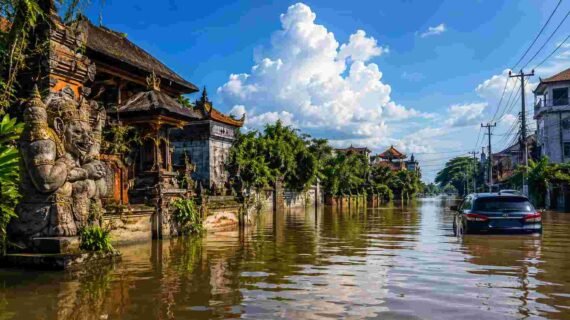
Where Bali floods is a common concern for travelers and residents, especially during the rainy season when certain low-lying and urbanized areas of the island are more prone to water accumulation. While Bali is known for its tropical beauty, lush rice fields, and vibrant tourism hubs, its geography and rapid development make some regions more vulnerable to seasonal flooding.
Why Flooding Happens in Bali
Flooding in Bali is primarily caused by heavy rainfall during the monsoon season, which typically runs from November to March. Intense downpours can overwhelm drainage systems, especially in densely populated or heavily developed areas. In addition, clogged waterways, reduced green spaces, and poor waste management contribute to water buildup.
Another factor is Bali’s topography. Water flows from the central highlands toward the coastal regions, meaning that low-lying coastal areas are more susceptible to flooding when rainfall is prolonged or particularly intense.
Areas in Bali Most Prone to Flooding
Kuta and Legian
Kuta and Legian are among the most flood-prone areas in Bali. These popular tourist destinations sit on flat, low-lying land with limited natural drainage. During heavy rains, streets can quickly become waterlogged, particularly in areas with dense construction and insufficient drainage infrastructure.
Seminyak
Seminyak, known for its upscale villas and beach clubs, also experiences flooding in certain zones. Areas near Petitenget and along smaller side streets often see temporary flooding after heavy rain due to drainage limitations and high development density.
Denpasar
As the capital city of Bali, Denpasar frequently faces flooding issues, particularly in urban neighborhoods. Poor drainage systems and high population density make it difficult for rainwater to disperse quickly, resulting in water accumulation on roads and residential areas.
Canggu
Canggu has grown rapidly in recent years, and with that growth has come increased flood risk. Areas with ongoing construction and inadequate infrastructure—especially near rice fields and riverbanks—can flood during prolonged rainfall.
Sanur
Sanur, a quieter coastal area, is not immune to flooding. Certain parts closer to the shoreline or near lagoons may experience minor flooding, particularly during high tides combined with heavy rain.
Read more: Why Small Waves Are Perfect for Learning in Bali
Areas Less Affected by Flooding
Ubud and the central highlands generally experience less flooding due to their elevated terrain. While heavy rain is common, water tends to flow downhill rather than accumulate. However, landslides can be a concern in these regions instead of flooding.
Similarly, areas in northern Bali, such as Lovina, are less prone to flooding due to lower development density and different rainfall patterns.
Read more: When Bali Low Season
When Flooding Is Most Likely
Flooding is most likely during peak rainy months—December, January, and February. Rain often falls in intense bursts rather than light showers, increasing the likelihood of temporary flooding. However, these floods are usually short-lived and subside within a few hours once the rain stops.
Read more: How to Avoid Getting Caught Inside
Tips to Avoid Flood-Prone Areas
Travelers can reduce the impact of flooding on their trip by choosing accommodations in slightly elevated areas or properties with good drainage systems. Checking recent weather conditions before traveling and avoiding low-lying neighborhoods during heavy rain forecasts can also help.
Staying informed through local news or hotel staff is useful, as they often know which areas to avoid during storms.
Read more: Why Bali Was Killed by Rama
How Bali Is Addressing Flooding
Local authorities in Bali are working to improve drainage systems, manage waste more effectively, and regulate development. Infrastructure projects aim to reduce flooding in key urban areas, although rapid tourism growth continues to present challenges.
Community initiatives and increased environmental awareness are also playing a role in reducing the impact of flooding, particularly through better waste management and river clean-up programs.
Read more: Timing Your Paddle for Takeoff
Final Thoughts
Understanding where Bali floods can help travelers plan smarter and avoid inconvenience during the rainy season. While flooding does occur in certain areas, it is usually temporary and manageable. By choosing the right location and staying informed, visitors can still enjoy everything Bali has to offer, even during the wet months.