
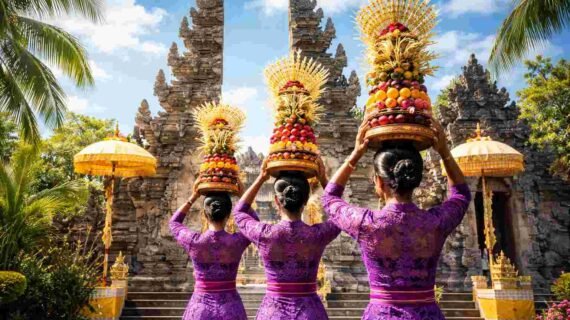
Why do people wear purple in Bali? This question often comes up for travelers who notice locals dressed in specific colors during ceremonies and religious events. In Bali, colors are not chosen randomly—they carry deep spiritual meanings rooted in Hindu beliefs and traditional customs. Purple, in particular, is a symbolic color that represents spirituality, mourning, and respect within Balinese culture.
The Spiritual Meaning of Colors in Bali
In Bali, colors are closely tied to religion and daily life. The Balinese Hindu belief system associates different colors with deities, directions, and elements of the universe. White, black, red, and yellow are the most commonly recognized sacred colors, each representing different gods and cosmic forces.
Purple, although not part of the primary color system, holds a unique and important role. It is often used to symbolize a deeper spiritual connection, transformation, and the transition between life and death.
Purple as a Symbol of Mourning
One of the main reasons people wear purple in Bali is related to mourning rituals. When a family experiences a loss, certain colors are worn to show respect and grief.
Connection to Death Ceremonies
Purple is commonly seen during funeral-related ceremonies, especially before the cremation ritual takes place. It reflects a state of mourning and solemnity. Balinese funerals are complex, multi-stage processes, and clothing colors change depending on the phase.
While white is often worn during the final cremation ceremony as a symbol of purification and release of the soul, purple may be worn in earlier stages to represent sadness, respect, and the emotional weight of loss.
Respect for the Deceased
Wearing purple is also a way for family members and close relatives to express their respect for the deceased. It signals to the community that the person is in a period of mourning and should be approached with sensitivity.
Purple in Religious and Spiritual Contexts
Beyond mourning, purple can also be linked to spirituality and devotion.
Symbol of Inner Reflection
Purple is often associated with introspection and spiritual awareness. In certain temple ceremonies or personal rituals, individuals may choose to wear purple to reflect a deeper connection to their inner self and the divine.
Rare but Meaningful Use
Unlike white or yellow, which are commonly worn during daily offerings and temple visits, purple is less frequently seen. This rarity gives it a more special and intentional meaning when it is used.
Cultural Etiquette Around Wearing Purple
If you are visiting Bali, understanding when and where to wear certain colors is important to show respect for local traditions.
When Tourists Should Avoid Purple
Tourists are generally not expected to follow strict dress codes unless attending a ceremony. However, wearing purple casually during a mourning period in a village could be seen as insensitive, especially if it coincides with a funeral event.
Appropriate Attire for Ceremonies
If you are invited to a ceremony, it is best to wear neutral and respectful colors such as white, yellow, or a traditional sarong and sash. If unsure, asking a local guide or host is always a good idea.
Read more: How to Choose the Right Surf School in Bali
The Influence of Tradition and Modern Life
Bali is a place where ancient traditions coexist with modern influences. While younger generations may wear a wide range of colors in daily life, traditional meanings remain strong during religious events.
Read more: Can You Show Cleavage in Bali
Preservation of Cultural Identity
Even as Bali becomes more globalized, the use of symbolic colors like purple in specific contexts shows how deeply rooted these traditions are. It is a way for the Balinese people to maintain their cultural identity and spiritual values.
Read more: Group vs Private Surf Lessons Which Is Better
Blending Old and New
In modern settings, purple may also appear in fashion without any religious meaning. However, during ceremonies, its traditional significance is still respected and understood by the local community.
Read more: Is It Easy to Meet Girls in Bali
Why Understanding Color Matters in Bali
Colors in Bali are more than just visual elements—they are a language of culture and spirituality. By understanding why people wear purple, visitors can gain a deeper appreciation for the island’s traditions.
Recognizing these meanings helps avoid misunderstandings and allows travelers to engage more respectfully with local customs.
Read more: What Happens During Your First Surf Lesson
FAQ
Purple represents sadness, respect, and the emotional state of grieving. It is often worn during certain stages of funeral ceremonies before the final cremation.
Yes, tourists can wear purple casually. However, it is best to avoid wearing it during religious ceremonies or in villages where a mourning period is taking place, unless specifically appropriate.
White, yellow, red, and black are the main ceremonial colors. Each has a specific meaning related to Hindu beliefs and the balance of the universe.
Purple is not commonly used in standard temple ceremonies but may appear in more specific spiritual contexts or personal expressions of devotion.
Visitors should wear a sarong and sash, along with modest clothing. Neutral or traditional colors like white and yellow are the safest choices.
Not always. While it is strongly associated with mourning, purple can also symbolize spirituality and introspection depending on the context.
Understanding why people wear purple in Bali offers insight into a culture that values symbolism, respect, and spiritual connection. By learning these subtle meanings, your experience in Bali becomes more meaningful and culturally aware.